The renewable energy and electric vehicle (EV) sectors are heralded as linchpins of a sustainable future. However, when key industry players fall into disrepute, it shakes investor confidence and raises questions about governance standards in these booming industries.
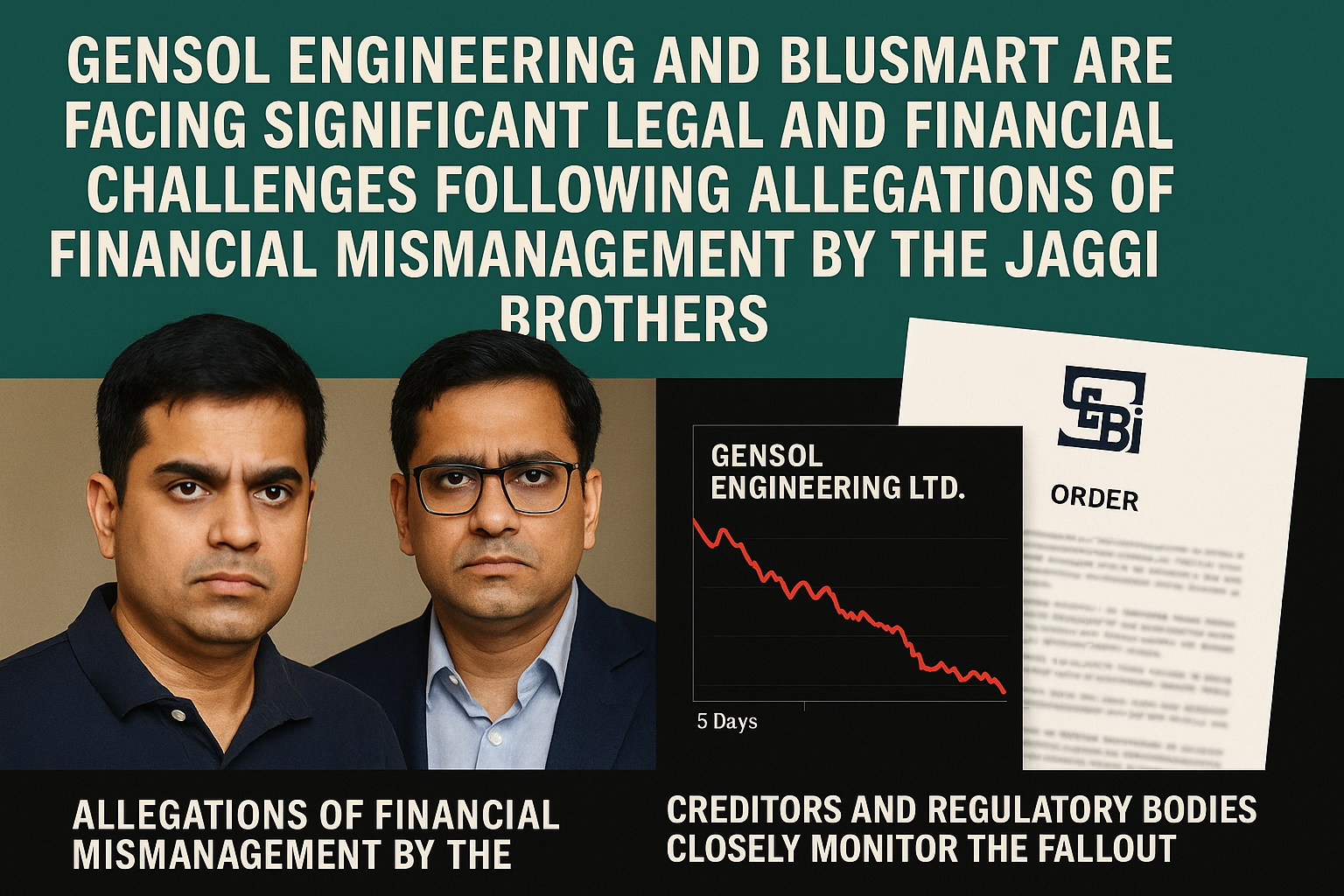
Such is the case with Gensol Engineering Ltd., a leader in India’s renewable energy sector, now ensnared in controversy. Allegations of financial mismanagement involving its founders, Anmol Singh Jaggi and Puneet Singh Jaggi, have sparked regulatory action from the Securities and Exchange Board of India (SEBI) and cast a shadow over its associated EV ride-hailing venture, BluSmart. This blog explores the scandal’s details, the actions taken by SEBI, the fallout, and its broader implications for the industry.
The Allegations: Misuse of Funds
The heart of the scandal lies in accusations of financial mismanagement and misuse of funds by the Jaggi brothers. SEBI’s interim investigation uncovered instances where corporate funds were reportedly diverted for personal use:
- Lavish Purchases:
- Anmol Singh Jaggi allegedly purchased a $5 million luxury apartment in The Camellias, DLF, one of India’s most expensive residential complexes, using funds intended for the procurement of electric vehicles (EVs).
- Additionally, company funds were reportedly used to acquire personal luxury items, including a ₹30,379 golf set.
These revelations have not only damaged investor confidence but also posed serious questions about the governance practices at Gensol and its subsidiaries.
SEBI’s Actions: Market Intervention
Regulatory intervention from SEBI was swift and decisive. SEBI has taken several measures to safeguard stakeholder interests and restore market stability:
- Ban on Key Individuals:
The Jaggi brothers have been barred from holding significant positions in Gensol Engineering and from participating in securities markets.
- Blocked Stock Split:
SEBI halted Gensol’s proposed 1:10 stock split, citing concerns over weak internal controls and mismanagement.
The market’s response to these developments was immediate. Gensol’s stock price plummeted by approximately 75%, compounded by credit downgrades, intensifying the financial pressure on the company.
BluSmart’s Suspension: A Ripple Effect on Operations
BluSmart, once positioned as a strong competitor to Uber and Ola in India, has borne the brunt of Gensol’s turmoil. The EV ride-hailing service, which operated over 8,000 electric taxis and numerous charging hubs across major cities like Delhi, Mumbai, and Bengaluru, has been forced to suspend its operations.
Key operational impacts include:
- Thousands of drivers losing their source of income overnight.
- Customers left in the lurch, with no clarity on refunds tied to their BluSmart wallet balances.
- The Delhi Airport Authority announcing the formal suspension of BluSmart services, further denting operational credibility.
The suspension of BluSmart is not just a setback for the Jaggi brothers but also sends shockwaves across the EV sector, highlighting the vulnerability of startups to governance failures.
Financial Fallout: Creditors on High Alert
The financial repercussions of the scandal extend well beyond regulatory scrutiny. Creditors and financial institutions have taken protective measures in response to mounting uncertainties:
- Shares Invoked by Creditors:
Prominent financial stakeholders, including Virtue Financial Services Private Ltd. and SICPA India Pvt. Ltd., have invoked a combined 5.49% of pledged shares held by Gensol’s promoters.
These actions illustrate growing apprehensions about Gensol’s ability to meet its financial obligations, further reducing the company’s credibility in the financial marketplace.
Broader Implications: IPO Plans and Industry Confidence
Gensol Engineering and BluSmart’s challenges not only impact these specific companies but also raise alarms for other ventures and sectors. The scandal has effectively stalled ambitious plans for initial public offerings (IPOs) for the Jaggi brothers’ other ventures, such as Matrix Gas and Renewables.
Key implications include:
- Market Hesitation:
Investors are likely to approach renewable energy and EV startups with greater caution, pressuring these sectors to adopt stricter governance practices.
- Reputational Damage:
Gensol’s fall from grace could discourage other firms from pursuing bold ventures if a lack of transparency tarnishes even successful companies.
- Regulatory Overhaul:
The scandal puts a spotlight on the need for stricter corporate governance standards, particularly in India’s burgeoning renewable and EV markets.
These developments are likely to have a domino effect on the broader Indian startup ecosystem, where trust, transparency, and governance are the cornerstones of long-term success.
Lessons for the Industry and Investors
The Gensol Engineering scandal is a cautionary tale that underscores the importance of accountability and transparency at every level of an organization. From investors to regulators, here’s what we can learn:
- Stronger Due Diligence:
Investors must demand not only financial disclosures but also clear evidence of ethical governance.
- Corporate Governance Standards:
Companies in capital-intensive sectors like EVs and renewables must prioritize operational discipline to safeguard stakeholder trust.
- Proactive Regulatory Oversight:
Regulatory bodies like SEBI must continue to enforce stringent monitoring mechanisms to deter potential mismanagement.
The Road Ahead
For stakeholders, the real question remains: how will the events at Gensol and BluSmart reshape the renewable energy and EV industry in India?
The fallout of this scandal goes beyond numbers and stock prices. It’s about rebuilding trust, implementing stronger safeguards, and ensuring that future ventures adhere to ethical principles. Institutional reform and industry-wide best practices will likely emerge to fill the gaps exposed by this incident.
For now, the fate of Gensol Engineering and BluSmart hangs in the balance. But their cautionary tale offers invaluable lessons to the Indian startup ecosystem at large, fostering a crucial dialogue about governance, transparency, and the ethical responsibilities of market leaders.
Feel free to share your experiences and insights in the comments below. Let’s continue the conversation and grow together as a community of traders and analysts.
By sharing this experience and insights, I hope to contribute to the collective knowledge of our professional community, encouraging a culture of strategic thinking and informed decision-making.
As always, thorough research and risk management are crucial. The dynamic nature of financial markets demands vigilance, agility, and a deep understanding of the tools at your disposal. Here’s to profitable trading and navigating the election season with confidence!
Ready to stay ahead of market trends and make informed investment decisions? Follow our page for more insights and updates on the latest in the financial world!
For a free online stock market training by Yogeshwar Vashishtha (M.Tech IIT) this Saturday from 11 am – 1 pm, please sign up with https://pathfinderstrainings.in/training/freetrainings.aspx
Experience profits with my winning algo strategies – get a free one-month trial with ₹15 lakh capital! – https://www.terminal.algofinder.in/auth/register
Disclaimer
This article should not be interpreted as investment advice. For any investment decisions, consult a reputable financial advisor. The author and publisher are not responsible for any losses incurred by investors or traders based on the information provided.