Introduction
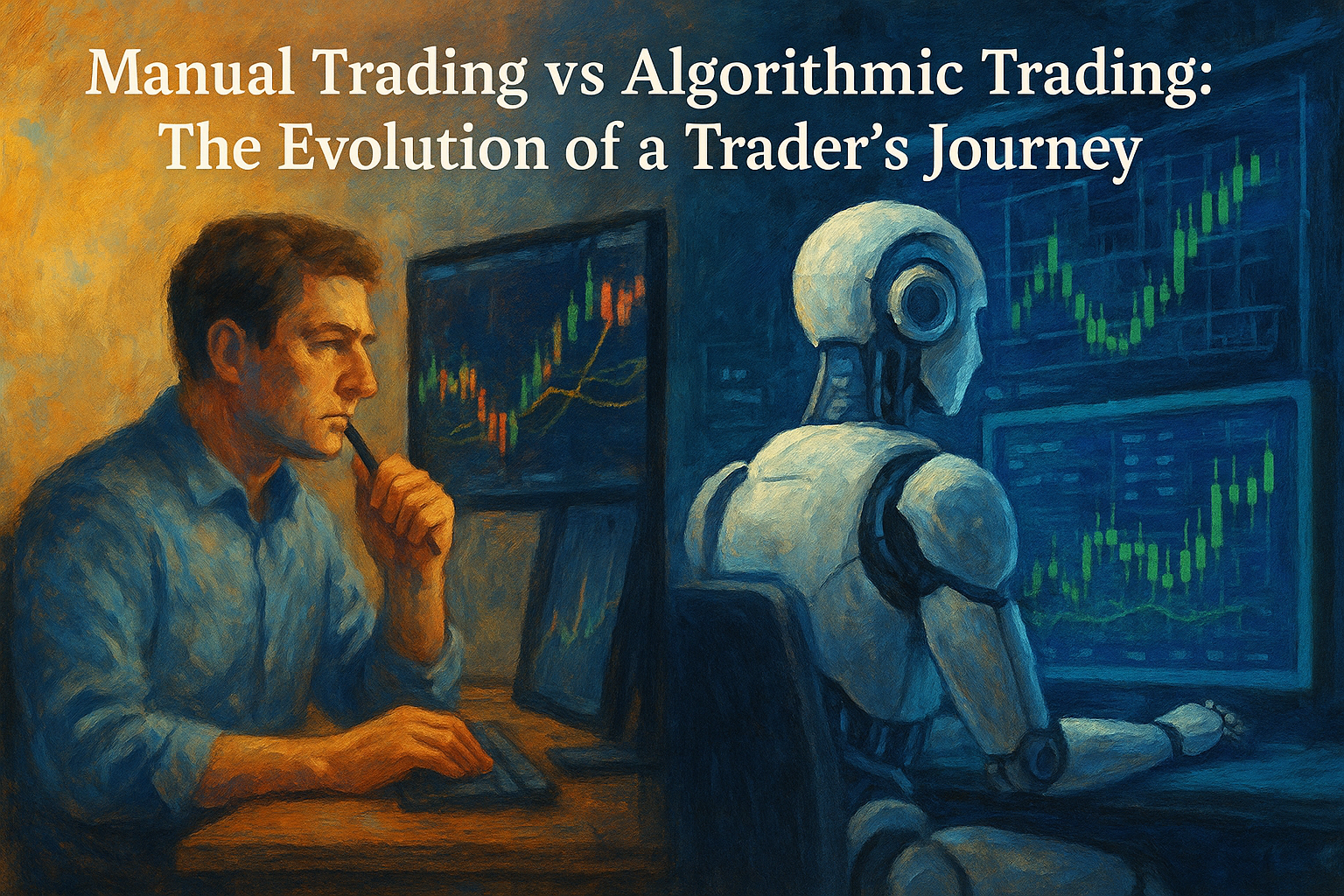
In the dynamic world of stock markets, two primary approaches dominate: Manual Trading and Algorithmic (Algo) Trading. While manual trading relies on human judgment, algo trading leverages technology to execute strategies automatically. As financial markets become increasingly complex and data-driven, understanding these differences is critical for every trader aiming for consistency, discipline, and peace of mind.
1. Human Emotions vs Systematic Discipline
| Manual Trading | Algorithmic Trading |
|---|---|
| Emotional decision-making | Emotion-free execution |
| Subject to fear, greed, impatience | Consistently rules-based |
| Emotional stress and mental fatigue | Peace of mind and psychological clarity |
Manual traders often get swayed by greed during a rally or panic during a fall. Algo trading removes this bias by relying on predefined rules, making trading emotionally neutral.
2. Discipline and Rule Adherence
| Manual Trading | Algorithmic Trading |
|---|---|
| Stop-loss rules often ignored | Stop-loss automatically enforced |
| Position sizing inconsistently applied | Position sizing rules never broken |
| No master stop-loss facility | Master stop-loss applied system-wide |
Discipline is hard to maintain during high-pressure trading sessions. Algorithmic systems enforce discipline by following the exact parameters entered by the trader or strategist.
3. Time Commitment and Scalability
| Manual Trading | Algorithmic Trading |
|---|---|
| Requires constant screen presence | Executes trades automatically |
| High time investment | Low time investment |
| Limited scalability due to physical limitations | Easily scalable across multiple strategies and instruments |
If you have a job or other responsibilities, manual trading is hard to manage. Algo trading, however, can run in the background—even when you’re asleep.
4. Risk Management and Efficiency
| Manual Trading | Algorithmic Trading |
|---|---|
| Susceptible to stop-loss hunting | Precise and stealthy order placement |
| Trailing stop-loss is impractical | Trailing stop-loss implemented automatically |
| Manual errors (fat-finger mistakes, timing delays) | No manual errors |
Algo trading systems allow tighter risk control and can deploy advanced order types like trailing stop-loss and OCO (one cancels the other) orders with precision.
5. Learning Curve and Skill Development
| Manual Trading | Algorithmic Trading |
|---|---|
| Skills improve with experience | Rule-based logic doesn’t need intuition |
| You trade based on judgment | Algorithms follow logic without judgment |
| Requires years of emotional conditioning | Requires coding or strategy formulation skills |
While manual trading depends on psychological and observational skill-building, algo trading focuses more on system design and data analysis.
6. Testing and Validation
| Manual Trading | Algorithmic Trading |
|---|---|
| No proper backtesting possible | Can backtest over years of data |
| Paper trading is difficult and inconsistent | Paper trading environments widely available |
| No way to verify strategies without real risk | Strategies can be validated before going live |
Algo trading lets you validate a strategy’s effectiveness using historical data and paper trading platforms, eliminating trial-and-error losses.
7. Execution and Reliability
| Manual Trading | Algorithmic Trading |
|---|---|
| Trades must be executed manually | Trades get executed automatically when conditions are met |
| Parameter monitoring must be continuous | Real-time parameter monitoring handled by software |
| You must be present to act | You can schedule trades or let the bot act independently |
This reliability enables traders to maintain consistency and sleep peacefully while the algorithms monitor and act on opportunities.
Conclusion: A Shift Toward Automation
Manual trading is an excellent way to learn the market and build intuition, but it’s increasingly unsustainable for busy professionals or those aiming for consistent returns. Algorithmic trading offers:
- Automation
- Discipline
- Scalability
- Peace of mind
It’s not about replacing human traders but enhancing their ability to act without bias, error, or fatigue.
Final Thoughts
“The goal is not to eliminate the trader, but to empower the trader with tools that allow them to perform at their best consistently.”
Whether you’re a full-time trader or a part-time investor, understanding and adopting algorithmic tools can be the game-changer that takes you from chaos to clarity.