India’s food delivery behemoth Swiggy has revealed its financial results for the fourth quarter of FY25, and the numbers are a mixed bag of swelling revenues, surging operational investments, and an optimistic outlook on its quick commerce vertical, Instamart. As the company charts an aggressive growth trajectory in a fiercely competitive space, CEO Sriharsha Majety’s commentary hints at a calculated pivot toward long-term profitability.
Double the Losses, Stronger the Growth
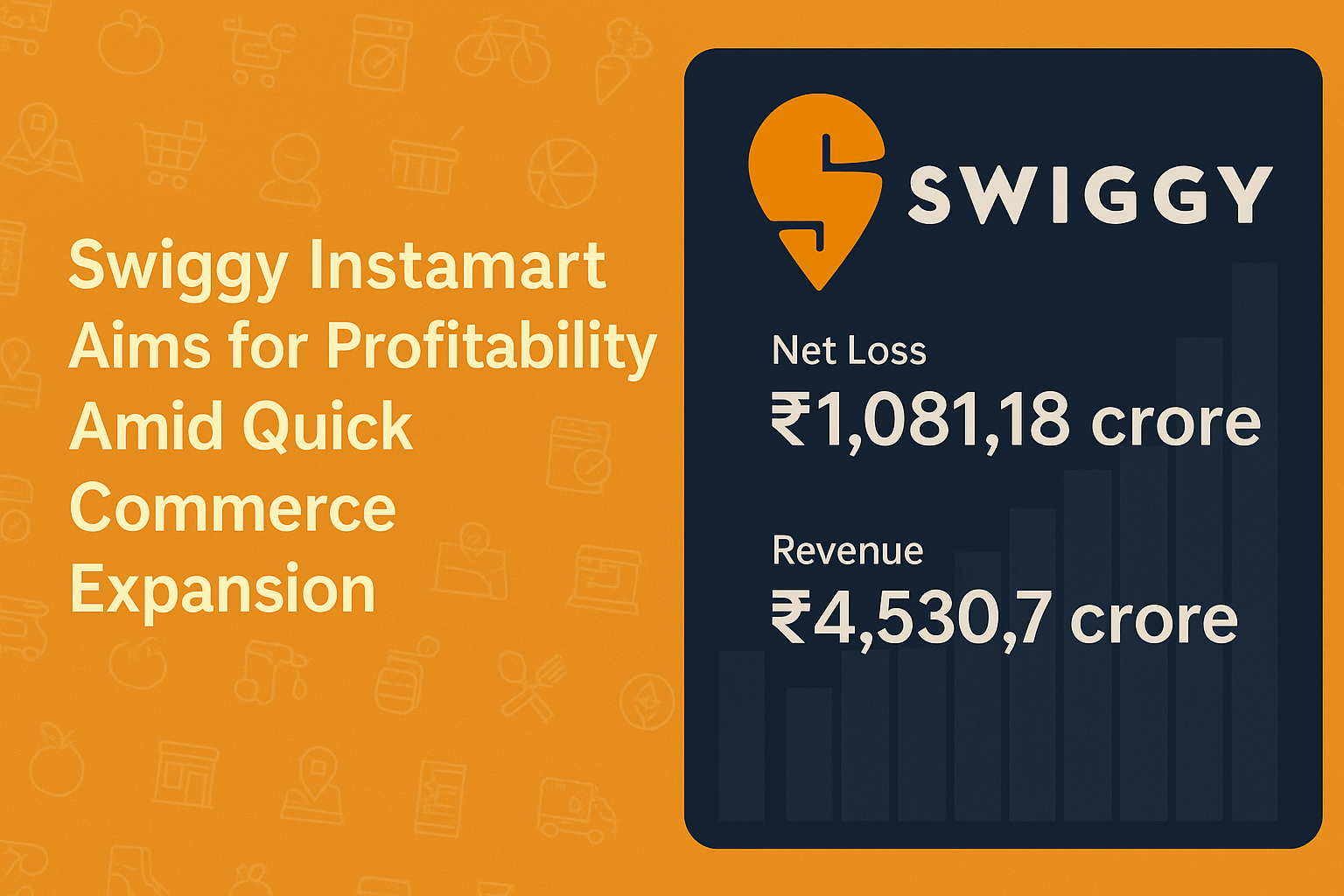
Swiggy reported a consolidated net loss of ₹1,081.18 crore for Q4 FY25 — a sharp increase from ₹554.7 crore in the same quarter last year, signaling a near 95% year-on-year (YoY) spike in losses. Despite this, its revenue from operations surged to ₹4,530.7 crore, a robust 44.8% jump from ₹3,143.2 crore a year ago.
While losses expanded, Swiggy’s leadership emphasized that many of the expenses were strategic growth investments, especially in Instamart, its quick commerce arm. For the full fiscal year, Swiggy’s revenue rose to ₹15,623 crore (up from ₹11,634 crore in FY24), while annual losses widened to ₹3,116.8 crore from ₹2,350.2 crore.
Instamart: Reaching Peak Losses, Aiming for Profitability
One of the central narratives from Swiggy’s Q4 update is the company’s confidence that Instamart has reached peak EBITDA losses by the end of the quarter. Majety stated that losses will now “progressively unwind,” driven by growth in Average Order Value (AOV), enhanced take-rates, and stringent cost control.
- AOV Growth: Instamart’s average order value increased by 13.3% YoY to ₹527, thanks to broader product selection and bundled value packs.
- Store Expansion: The platform added 316 dark stores in Q4 alone, increasing active dark store space to 4 million sq ft, a 62% QoQ increase.
- Massive User Growth: Monthly transacting users (MTUs) rose by 40% QoQ to 9.8 million — an all-time high — as customer acquisition intensified.
However, this expansion came at a cost. Contribution margin slipped to -5.6% from -4.6% in the previous quarter, and adjusted EBITDA losses for Instamart deepened to ₹840 crore.
A Tough Battlefield: Competing in Quick Commerce
Swiggy is not alone in this high-stakes market. Rivals like Zomato’s Blinkit and newcomer Zepto are aggressively expanding their footprints, particularly in tier-II cities and non-food verticals. Blinkit reported Q4 revenues of ₹6,201 crore and a small profit of ₹39 crore, albeit a steep decline from ₹175 crore in the same period last year.
Swiggy’s strategy to stay competitive involves:
- Innovative Formats: Launching “Megapods” and “Maxxsaver” to enhance delivery reach and offer differentiated value.
- Geographic Reach: Growing its network to over 1,000 dark stores across 124 cities.
- Selective Experimentation: Piloting new initiatives like Snacc (for impulse food buying) and Pyng (an AI-powered professional services platform) to diversify user engagement.
Food Delivery: Sluggish But Resilient
Swiggy’s traditional food delivery business showed signs of flattening, with gross order value (GOV) slightly down to ₹7,347 crore from ₹7,436 crore in Q3. Despite this, the platform continued to drive efficiency and consumer satisfaction:
- Bolt Initiative: Its speedy delivery program now handles over 12% of food orders.
- Premium Engagement: Subscription services like “One BLCK” contributed to stickier user behavior.
- Profitability in New Segments: The Out-of-Home Consumption segment turned profitable with a 41.6% growth in GOV to ₹872 crore.
Adjusted EBITDA across Swiggy’s consolidated business grew 15.4% QoQ and over 5x YoY to ₹212 crore, representing 2.9% of GOV — up significantly from 0.5% a year ago.
The Road Ahead: Steady Growth Amid Uncertainty
Swiggy maintains a medium-term growth guidance of 18-22%, but acknowledged that Q4 had a weak start due to post-festive season lull, eventually recovering thanks to heightened activity during a major sporting event.
Majety remains optimistic:
“We remain focused on growth, on the back of delivering unparalleled convenience to consumers.”
The coming quarters will be critical as Swiggy balances its aggressive expansion with a need to stem financial bleed — particularly in the capital-intensive quick commerce space.
Conclusion: Strategic Burn or Growing Pains?
Swiggy’s latest results reflect a company in transformation. While the headline losses may alarm at first glance, the underlying indicators — higher order values, broader reach, growing user base, and narrowing unit losses — suggest that Swiggy is playing the long game.
Instamart, the company’s current crown jewel, is riding a wave of consumer demand and operational expansion. If Swiggy can sustain AOV growth and optimize its store economics while fending off rivals, profitability may not be far on the horizon.
In the fast-paced world of quick commerce, those who endure the burn may just emerge as winners. Swiggy appears ready for the marathon.
Feel free to share your experiences and insights in the comments below. Let’s continue the conversation and grow together as a community of traders and analysts.
By sharing this experience and insights, I hope to contribute to the collective knowledge of our professional community, encouraging a culture of strategic thinking and informed decision-making.
As always, thorough research and risk management are crucial. The dynamic nature of financial markets demands vigilance, agility, and a deep understanding of the tools at your disposal. Here’s to profitable trading and navigating the election season with confidence!
Ready to stay ahead of market trends and make informed investment decisions? Follow our page for more insights and updates on the latest in the financial world!
For a free online stock market training by Yogeshwar Vashishtha (M.Tech IIT) this Saturday from 11 am – 1 pm, please sign up with https://pathfinderstrainings.in/training/freetrainings.aspx
Experience profits with my winning algo strategies – get a free one-month trial with ₹15 lakh capital! – https://terminal.algofinders.com/algo-terminal
Disclaimer
This article should not be interpreted as investment advice. For any investment decisions, consult a reputable financial advisor. The author and publisher are not responsible for any losses incurred by investors or traders based on the information provided.