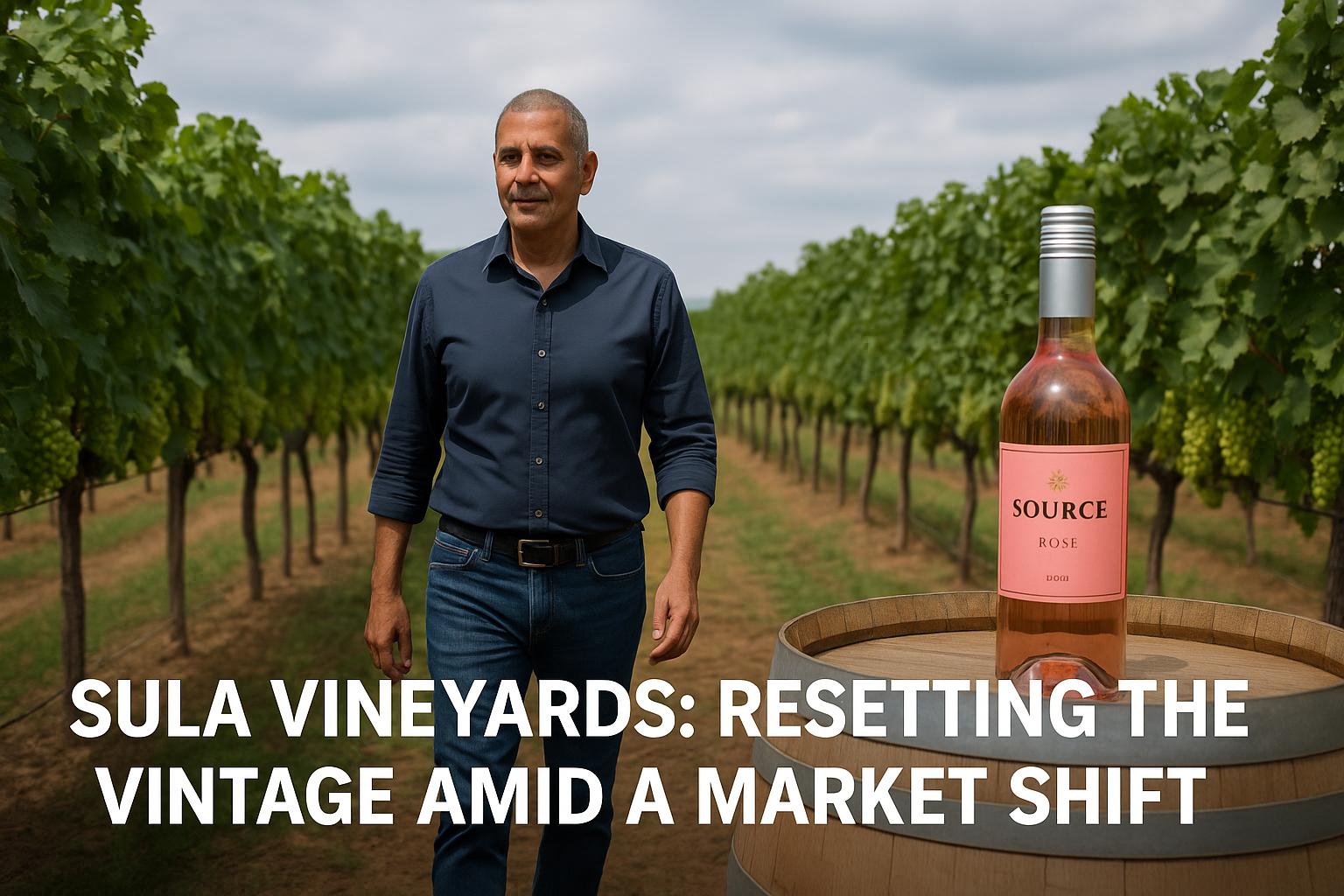
In the wake of a post-pandemic surge, India’s leading wine producer, Sula Vineyards Ltd, is entering a new phase of recalibration. Having ridden the highs of booming wine demand through 2023, the company is now adapting to shifting consumer behaviors, mounting competition, and a general slowdown in urban consumption. With over 60% market share in premium and elite wine categories, Sula is leveraging this dominant position to pivot its strategy while nurturing its identity as a pioneering Indian wine label.
From Boom to Balance: Navigating a Reset Year
Between 2020 and 2023, wine sales in India surged, buoyed by home-bound consumers and a growing affinity for finer experiences. But as FY24 rolled in, that momentum started to wane. According to CEO Rajeev Samant, 2024 marked a visible deceleration, spurred by a wider urban consumption slowdown and excessive stockpiling, both at retail and consumer levels. As a result, FY25 is being treated as a “reset year”—a necessary breather to reevaluate growth paths.
Sula is now targeting sustainable single-digit growth in the highly competitive alcoholic beverages market, recognizing that wine competes not just within its category but against spirits and other drink formats altogether.
Cooling the Red: Embracing Climate and Consumer Shifts
India’s traditional affinity for red wine is facing a challenge from the country’s rising temperatures. Samant acknowledges that red wine does not naturally complement India’s long, hot summers, prompting a shift in Sula’s product focus. With an uptick in demand for lighter, cooler varietals like Rosé and white wines, the company is refreshing its lineup and engaging directly with urban audiences through wine festivals planned across three to four major cities.
This approach is not just about weather-appropriate drinking—it’s also strategic branding. By cultivating a culture around wine through immersive events, Sula is broadening its consumer base and making wine more accessible and aspirational across newer urban markets.
Import Fatigue: Building Strength from Within
Despite the rise of imported wines—fueled partly by the UK-India free trade agreement—Sula is intentionally dialing back its reliance on imports. The import segment, though growing, has become overcrowded, leading to thinner margins. From 16% of its total wine sales in 2019, exports now account for just 2% in FY25. Instead, Sula is sharpening its focus on building its own portfolio and bolstering its national distribution strength.
A key player in this strategy is the Source range—premium wines priced upwards of ₹1,200, featuring varietals like Pinot Noir, Sauvignon Blanc, and Rosé. These wines are already present in select markets, and plans are underway to expand their footprint across more states this year. Equally important is Sula’s push into the ₹700–800 segment, which Samant believes is a sweet spot with minimal competition from either domestic or international players.
Broadening the Palette: Premium White Wines and Market Insights
Sula is preparing to launch a new premium white wine in FY26, recognizing the need to inject excitement into lower and mid-tier price categories as well. Currently, about 30% of its sales come from white wines, with red wines commanding 60%, and Rosé rounding out the rest.
Interestingly, the premium and elite segments—making up 76% of FY25 sales—are outperforming the economy range, both in volume and value. Sula’s elite wines, priced above ₹1,050 in markets like Maharashtra, are registering double-digit growth, indicating that the premiumization strategy is resonating with the evolving Indian wine consumer.
Geographically, Hyderabad has emerged as Sula’s fastest-growing market. Maharashtra and Karnataka, while still important, witnessed some stagnation and degrowth, attributed to factors like elections and local disruptions, particularly in Pune.
The Rise of Wine Tourism: Sula’s Hospitality Vision
While strengthening its product portfolio, Sula is also growing its hospitality business—an area that adds a lifestyle dimension to its brand. The company currently operates two luxury properties, The Source and Beyond, offering a total of 104 rooms.
In the pipeline are a 3,500 sq. ft. tasting room in Dindori, strategically located near the Gujarat border, and a new 30-room resort in Nashik, scheduled for launch in the second half of FY26. These expansions aim to deepen the wine experience, turning it into a travel and cultural affair for wine lovers.
Industry Outlook: Competing in a Crowded Cellar
The broader Indian wine market in 2024 stood at $9.3 billion, with a significant majority—about $7 billion—driven by home consumption. Out-of-home sales, including restaurants and bars, contributed the remaining $2.2 billion. This data reinforces the importance of retail and direct consumer strategies for players like Sula.
However, with less than 1% of all alcoholic beverage consumption attributed to wine, the category still has vast untapped potential. The entry of more importers, potential duty cuts, and shifting preferences demand nimble innovation and robust market positioning.
A Measured Vintage Ahead
Sula’s FY25 revenue grew marginally to ₹619.3 crore from ₹608.6 crore the previous year, but net profit declined from ₹93.3 crore to ₹70.2 crore, mainly due to rising inventory costs. Yet, this isn’t a story of decline—it’s one of realignment.
In a market where the wine glass is still half full, Sula Vineyards is choosing precision over pace. Whether through product innovation, city-centric festivals, hospitality experiences, or tighter control on margins, the company is carefully curating its next act—one that balances premium ambitions with pragmatic strategy.
Feel free to share your experiences and insights in the comments below. Let’s continue the conversation and grow together as a community of traders and analysts.
By sharing this experience and insights, I hope to contribute to the collective knowledge of our professional community, encouraging a culture of strategic thinking and informed decision-making.
As always, thorough research and risk management are crucial. The dynamic nature of financial markets demands vigilance, agility, and a deep understanding of the tools at your disposal. Here’s to profitable trading and navigating the election season with confidence!
Ready to stay ahead of market trends and make informed investment decisions? Follow our page for more insights and updates on the latest in the financial world!
For a free online stock market training by Yogeshwar Vashishtha (M.Tech IIT) this Saturday from 11 am – 1 pm, please sign up with https://pathfinderstrainings.in/training/freetrainings.aspx
Experience profits with my winning algo strategies – get a free one-month trial with ₹15 lakh capital! – https://terminal.algofinders.com/algo-terminal
Disclaimer
This article should not be interpreted as investment advice. For any investment decisions, consult a reputable financial advisor. The author and publisher are not responsible for any losses incurred by investors or traders based on the information provided.