Corporate governance is often likened to the scaffolding of a robust business legacy. It provides the structural integrity that allows organizations to weather storms of scrutiny while maintaining public trust. For legacy institutions like the Tata Group, known for its impeccable reputation and unwavering ethical foundations, governance is not just a necessity but an expectation.
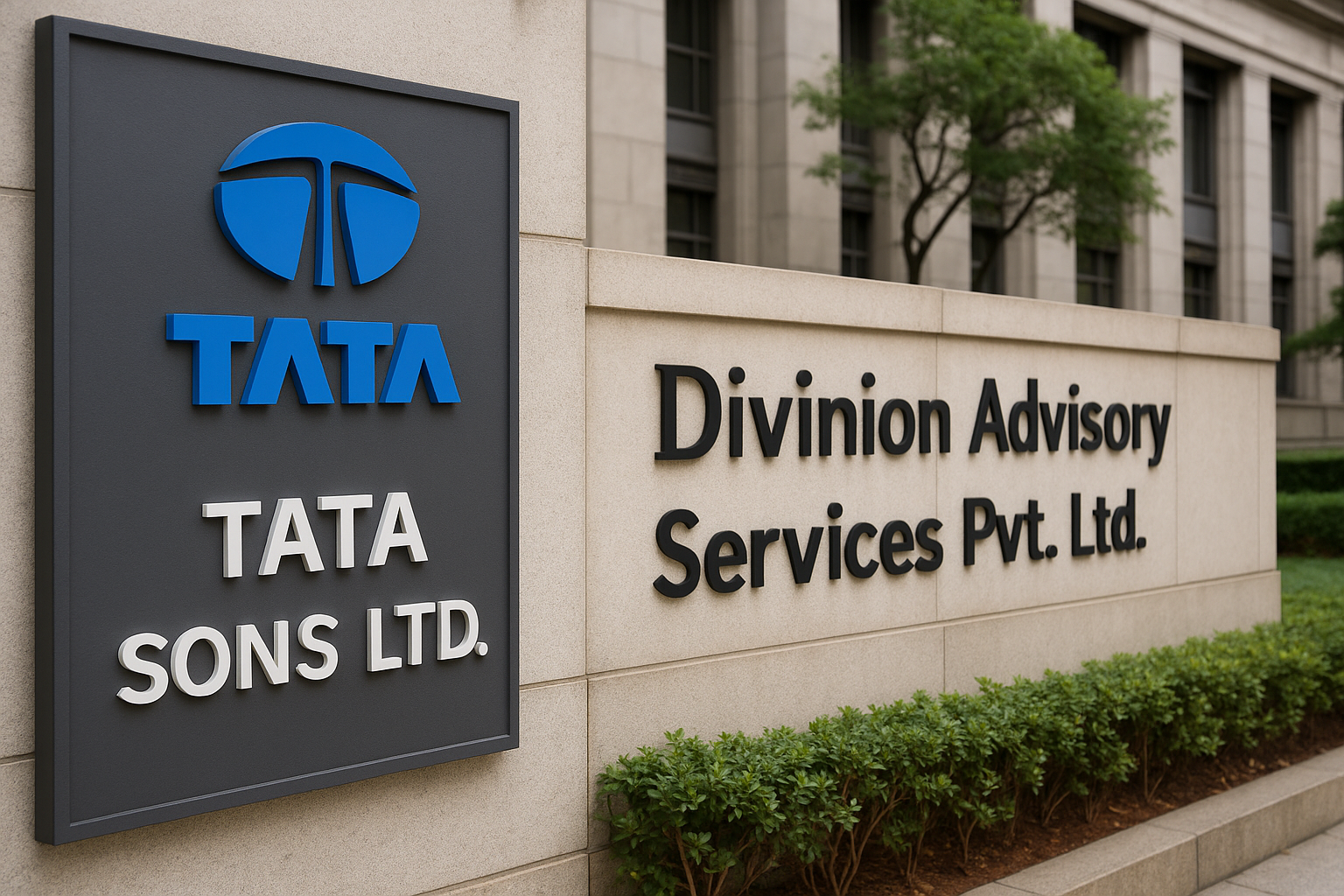
Yet, even the smallest misstep can ignite questions, especially when reputational stakes are this high. One such episode unfolded in 2022, when a wealth management firm named Divinion Advisory Services Pvt. Ltd. found itself momentarily but erroneously associated with the Tata Group. Though later clarified as a listing error, the incident has since sparked discussions on transparency, conflict-of-interest management, and how readily perception can influence public sentiment.
With this article, we unpack the story, and explore what this case reveals about the critical importance of safeguarding governance norms in legacy businesses.
A “Clerical” Misdirection?
Imagine the weight of being included in a disclosure listing “Tata Group and sponsor companies.” For any business entity, this association is synonymous with credibility, investor confidence, and the trust that has been cultivated over generations. But in 2022, Divinion found itself accidentally listed by Tata Pension Management Ltd., a subsidiary of Tata Asset Management, among 473 such companies.
The issue? Divinion is neither sponsored by nor affiliated with the Tata Group. It is, in fact, a private wealth-management firm founded by Shreemoyee Mukhopadhyay, the daughter of Suprakash Mukhopadhyay, a senior Tata Sons executive and Group Company Secretary.
While Tata Pension Management promptly clarified that the listing was erroneous and that Divinion is not part of Tata’s ecosystem, it still left many pondering the origins of this error. Was it a simple oversight? Or did it point to deeper nuances related to governance and oversight? The disclosure, though corrected in future filings, served as a stark reminder that even minor administrative lapses can create ripples when tied to a giant like Tata.
Who Owns Divinion?
To better understand the unfolding narrative, it’s crucial to examine Divinion’s ownership and leadership structure. Regulatory filings reveal that when Divinion was established, its ownership was split equally between Suprakash Mukhopadhyay’s wife Paromita and daughter Shreemoyee. By 2024, ownership expanded to include the youngest Mukhopadhyay daughter, Shreenandini, who now shares equal parts ownership with her mother and sister.
Interestingly, Divinion has tapped into the pool of former Tata executives for its leadership roles:
- Hormuz Bulsara, a former COO at Tata Asset Management, took over as Divinion’s CEO in 2023.
- S. Mahalingam, a former CFO at Tata Consultancy Services (TCS), joined as a board member in 2022.
- Adil Burjor Busha, previously part of Tata Pension Management, stepped in as CFO in October 2024.
While these appointments seem to draw from an experienced talent pool, the overlap with Tata’s leadership network has fueled perceptions of unofficial preferential access. Though these associations involve no explicit breach of governance norms, they underline the sensitivity surrounding reputational integrity in legacy organizations.
The Fine Line Between Professionalism and Perception
The narrative surrounding Divinion took another twist when allegations of informal solicitation surfaced. An unnamed former Tata executive claimed to have been approached by Suprakash Mukhopadhyay, who allegedly explored whether the executive would consider investing in Divinion. Although no formal business transactions between Divinion and the Tata Group were uncovered, such claims risk drawing the spotlight away from the facts and toward potential conflicts of interest.
What complicates matters further is the Tata Code of Conduct, a protocol designed to prevent conflicts of interest. Under these guidelines, employees must avoid situations where they or their family members could derive improper personal benefits from professional connections or transactions. Whether all family and business interests were formally disclosed in this instance remains ambiguous, bringing to the forefront the role of oversight and accountability.
Governance Lessons for Legacy Giants
For a group synonymous with ethical business, the Tata Group’s handling of this situation is under scrutiny. The incident touches several critical themes in corporate governance:
- Transparency: Oversight errors, even minor ones, must be addressed with openness to preserve institutional credibility.
- Conflict of Interest Management: Key managerial personnel (KMPs) must ensure that all personal and familial activities are disclosed to avoid perceived breaches.
- Public Trust: When a legacy institution like Tata is involved, safeguarding public confidence requires not only compliance but also proactive stewardship of its reputation.
Former Infosys CFO V. Balakrishnan weighed in, underscoring the role of executive commitment in effective governance. He noted that protecting the brand is about not just “formal legalities, but also perceptions and behavior aligned with governance principles.”
Divinion in Numbers
Despite its brush with controversy, Divinion Advisory Services has achieved measurable success. Between FY23 and FY24, its revenue soared fivefold, from ₹40.9 lakh to ₹1.94 crore, marking its growth trajectory. The firm’s SEBI-registered fund, Divinion Alternative India Fund, specializes in equity investments and turned a modest profit after having reported losses in the previous fiscal year.
This financial progress may reflect positively on Divinion’s business, but it also underscores the importance of detangling such achievements from controversies to ensure credibility.
Why Public Perception Matters in Governance
At its core, the Divinion episode reconfirms the notion that governance is more than a checklist of rules. It is a practice rooted in safeguarding not just processes but also trust, especially in the digital age, when news and opinions amplify exponentially. For legacy businesses like Tata, a misstep—even unintentional—can feel amplified due to the organization’s towering expectations of credibility.
The incident highlights that ethics in business extend beyond strict adherence to laws or codes of conduct. What matters equally is how those measures are interpreted in the public eye and the vigilance required to foster both compliance and confidence.
Upholding Legacy the Right Way
The Tata Group’s reputation as a paragon of governance remains a touchstone in India’s corporate world. Yet, the Divinion episode serves as a timely reminder that even giants cannot afford to rest on their laurels for a moment. Governance, like any other system, must evolve and adapt in real time.
For key stakeholders, this means being acutely aware of how decisions, associations, and actions may be perceived—not just internally but by the public and partners alike. By drawing clear boundaries between personal endeavors and professional responsibilities, legacy institutions can continue preserving their role as beacons of trust in a rapidly shifting business landscape.
Feel free to share your experiences and insights in the comments below. Let’s continue the conversation and grow together as a community of traders and analysts.
By sharing this experience and insights, I hope to contribute to the collective knowledge of our professional community, encouraging a culture of strategic thinking and informed decision-making.
As always, thorough research and risk management are crucial. The dynamic nature of financial markets demands vigilance, agility, and a deep understanding of the tools at your disposal. Here’s to profitable trading and navigating the election season with confidence!
Ready to stay ahead of market trends and make informed investment decisions? Follow our page for more insights and updates on the latest in the financial world!
For a free online stock market training by Yogeshwar Vashishtha (M.Tech IIT) this Saturday from 11 am – 1 pm, please sign up with https://pathfinderstrainings.in/training/freetrainings.aspx
Experience profits with my winning algo strategies – get a free one-month trial with ₹15 lakh capital! – https://www.terminal.algofinder.in/auth/register
Disclaimer
This article should not be interpreted as investment advice. For any investment decisions, consult a reputable financial advisor. The author and publisher are not responsible for any losses incurred by investors or traders based on the information provided.