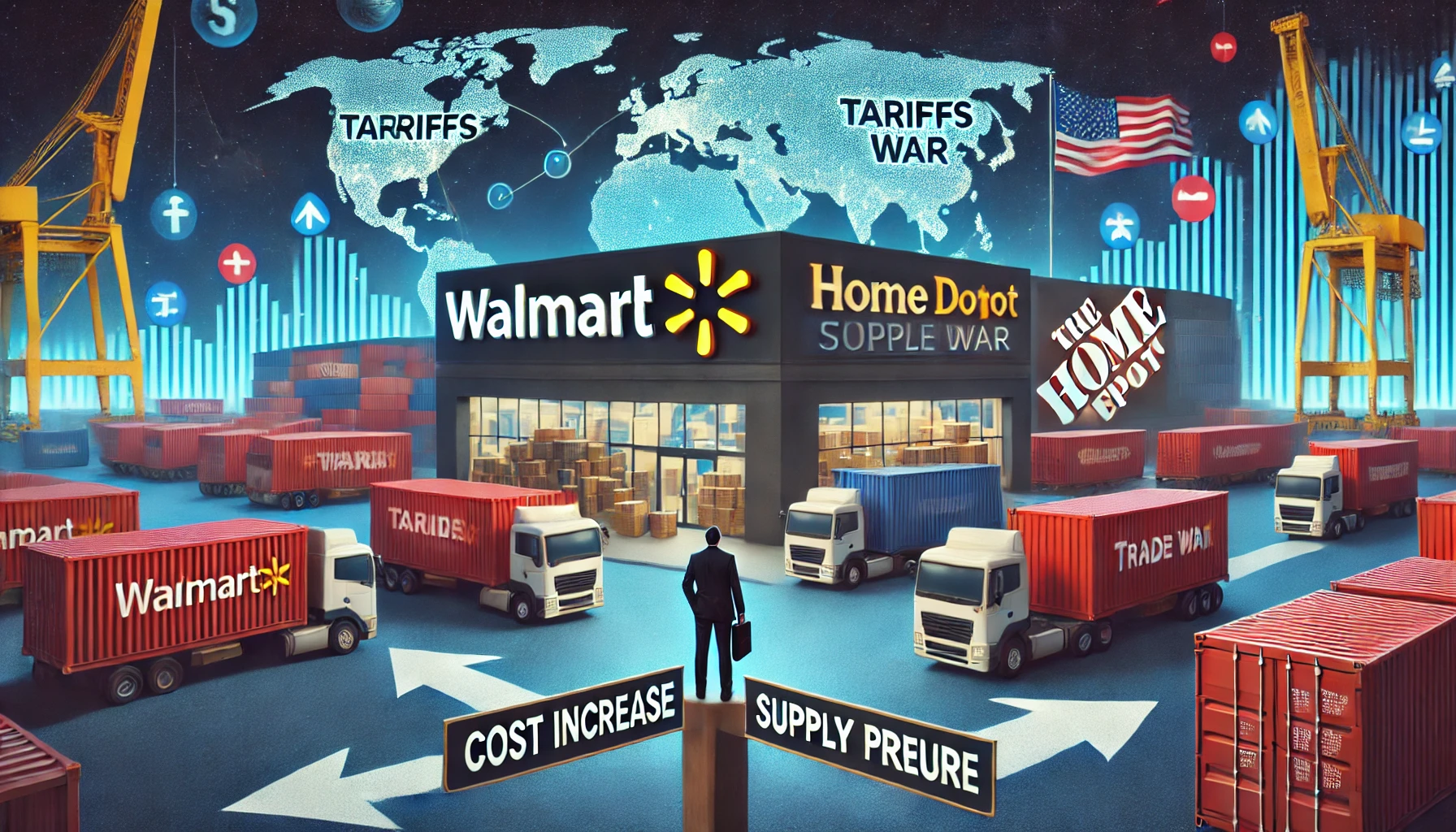
The escalating trade war between the United States and China, fueled by President Trump’s tariff policies, has placed America’s largest retailers in a high-stakes challenge. With tariffs driving up costs, companies like Walmart, Home Depot, and Target have been forced to rethink their strategies to stay competitive and profitable. From negotiating supplier discounts to relocating production and reworking pricing structures, these retailers are testing every option to counter rising costs.
The ripple effects, however, extend far beyond their balance sheets, disrupting global supply chains and creating uncertainty for businesses and consumers alike. This blog explores how some of the largest U.S. retailers are maneuvering through these turbulent waters.
Retailers Under Pressure
The Trump administration’s 10% tariff on Chinese imports, which later increased to a second wave of 10%, has put immense financial strain on retailers. Given the reliance on Chinese manufacturing, these tariffs raised the stakes dramatically for retailers, who either pass costs onto consumers or find ways to absorb them.
Many retailers, instead, turned to their suppliers for relief. Suppliers were given an ultimatum: bear the cost of tariffs or risk losing the business entirely. However, this demand has proven untenable for many suppliers already struggling with razor-thin margins. Joe Jurken, founder of the ABC Group, remarked that there is a sense of “panic” among manufacturers, with many rushing to explore production alternatives outside of China.
One significant outcome of this pressure is the increasing momentum toward relocating production to nations in Southeast Asia, India, or even Latin America. While this shift offers potential cost savings, it is neither immediate nor risk-free, as transitioning an entire supply chain takes significant time and investment.
Walmart and Home Depot Push for Lower Prices
Walmart, the largest U.S. retailer, is one of the most visible players navigating this turbulent period. Walmart used its scale and influence to request price reductions from suppliers. For example, Rongli Garments, a Chinese garment producer, initially agreed to absorb some of the tariff costs to maintain its deal with Walmart. However, when Walmart pushed for further discounts following additional tariff impositions, Rongli had to decline, and Walmart shifted to pursuing alternative suppliers outside China.
Similarly, Home Depot exercised influence over its supplier network. One U.S.-based supplier of lighting and home décor agreed to a temporary 10% discount that was offset partially by its Chinese manufacturing partner. However, subsequent tariff increases pushed the limits, leading this supplier to move production to another country entirely, avoiding tariff-induced price hikes.
Navigating Uncertainty in Trade Policy
The volatility of U.S. trade policy has added to the uncertainties retailers and suppliers need to contend with. For instance, the online flower retailer Bouqs Co. found itself in an urgent planning phase when President Trump threatened a 25% tariff on Colombian imports due to political disputes. Though the tariff threat was eventually withdrawn, it highlighted the unpredictable nature of policy shifts and their cascading effects on supply chains.
According to Kimberly Kirkendall, president of International Resource Development, businesses shouldn’t assume that moving outside of China eliminates volatility. “Choosing any other country other than the U.S. and thinking it’s a safe haven is risky,” she noted. Diversifying production across multiple countries is emerging as a best practice for businesses prepared to invest in a long-term, stable supply chain strategy.
Balancing Cost, Quality, and Consumer Pricing
While the drive to reduce reliance on China continues, some companies are reluctant to leave due to the superior quality of goods produced there. Take Costco, for example, which opted to continue sourcing patio furniture from China despite higher costs. The craftsmanship from Chinese manufacturers proved superior to alternatives, prompting Costco to absorb some of the tariff costs while passing on a portion to their customers.
To offset the financial impact, retailers like Target are adopting creative pricing strategies. Target implements “pricing architecture,” making careful product-specific pricing decisions to balance overall margins. For instance, Target may maintain the price of holiday ornaments at $3 to attract consumers while raising the price of stockings to compensate.
These strategies illustrate how retailers are working to strike a delicate balance between operational costs and consumer affordability.
The Big Picture
America’s biggest retailers are engaged in a complex balancing act as they grapple with rising costs, supplier negotiations, and unpredictable trade policy shifts. Whether pressuring suppliers for discounts, relocating production out of China, or employing pricing strategies that keep consumer-facing costs stable, these companies are proving resilient in volatile times.
The trade war exemplifies how interconnected global supply chains are and how even minor policy changes can lead to worldwide tremors. Retailers with the financial ability and agility to make preemptive, strategic decisions—such as diversifying production across regions or investing in long-term partnerships—are better positioned to weather similar global disruptions in the future.
Navigating a global landscape as unpredictable as it is interconnected requires not only resilience but also adaptability. For America’s largest retailers, these strategic maneuvers are as much about staying competitive today as they are about preparing for the challenges tomorrow.
Feel free to share your experiences and insights in the comments below. Let’s continue the conversation and grow together as a community of traders and analysts.
By sharing this experience and insights, I hope to contribute to the collective knowledge of our professional community, encouraging a culture of strategic thinking and informed decision-making.
As always, thorough research and risk management are crucial. The dynamic nature of financial markets demands vigilance, agility, and a deep understanding of the tools at your disposal. Here’s to profitable trading and navigating the election season with confidence!
Ready to stay ahead of market trends and make informed investment decisions? Follow our page for more insights and updates on the latest in the financial world!
For a free online stock market training by Yogeshwar Vashishtha (M.Tech IIT) this Saturday from 11 am – 1 pm, please sign up with https://pathfinderstrainings.in/training/freetrainings.aspx
Experience profits with my winning algo strategies – get a free one-month trial with ₹15 lakh capital! – https://www.terminal.algofinder.in/auth/register
Disclaimer
This article should not be interpreted as investment advice. For any investment decisions, consult a reputable financial advisor. The author and publisher are not responsible for any losses incurred by investors or traders based on the information provided.