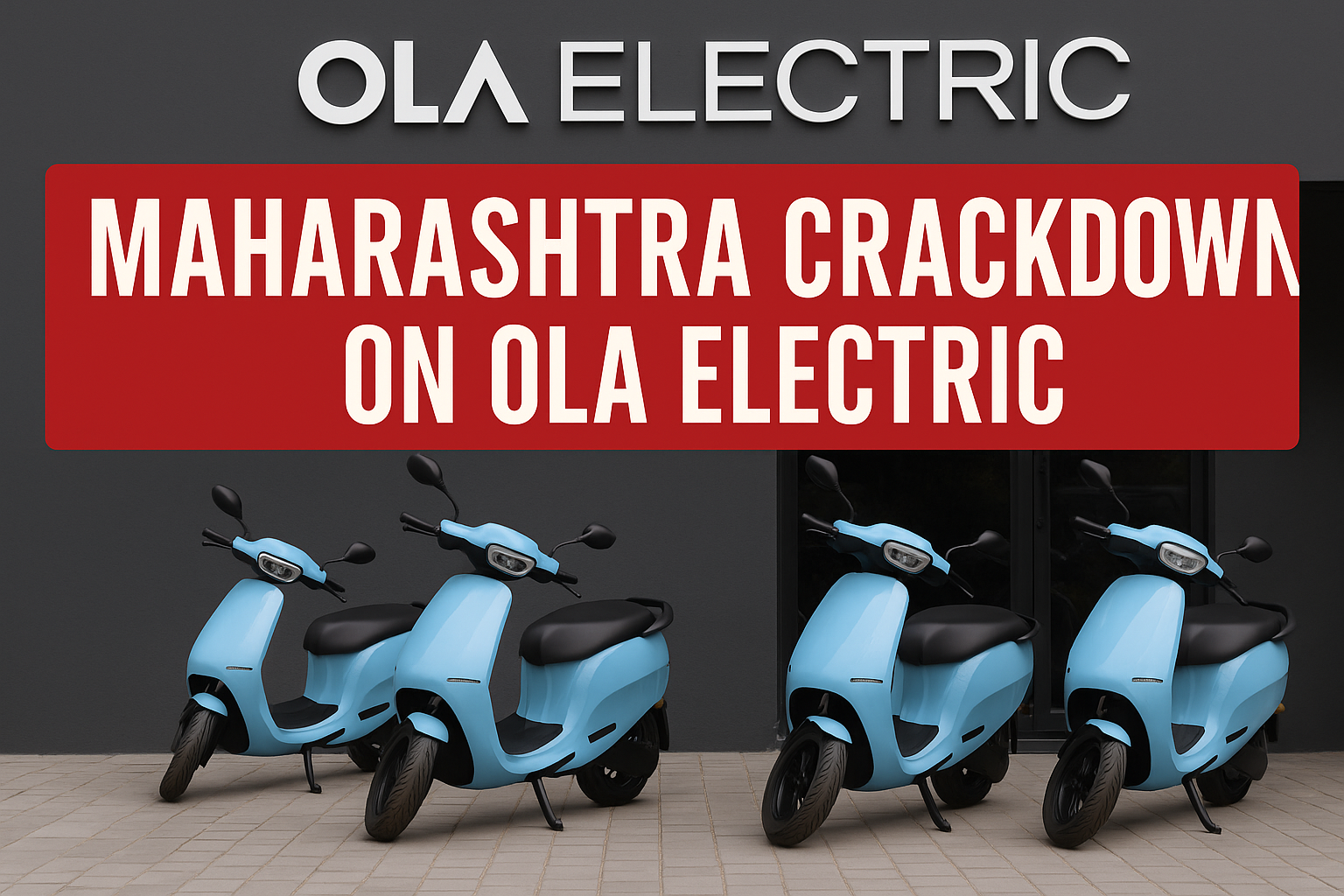
India’s electric two-wheeler market is witnessing rapid evolution, with companies pushing boundaries to capture growing consumer interest in eco-friendly transportation. However, this growth comes with its share of challenges. Maharashtra’s recent regulatory crackdown on Ola Electric highlights the complexities businesses face in complying with local regulations in an emerging industry.
This blog unpacks the situation, examining the reasons behind the crackdown, its impact on India’s largest electric two-wheeler market, and the broader implications for Ola Electric as it maneuvers through increasing competition and regulatory hurdles.
Understanding the Regulatory Action
On April 16, 2025, Maharashtra’s joint transport commissioner issued a directive ordering the closure of 121 Ola Electric stores that failed to obtain the required trade certificates. Trade certificates are essential for operating vehicle retail outlets by law. Of the 121 stores flagged, 75 have already shut down, while the remaining are expected to follow suit. Additionally, show-cause notices have been issued to another 270 outlets across the state.
The directive was triggered by a special inspection drive conducted by regional transport offices (RTOs) in cities like Mumbai, Pune, and Borivali. The inspections revealed that certain showrooms were operating without valid trade documents, and vehicles were being displayed and sold without proper paperwork. Ola Electric was given three days to respond, and the company claimed to be working toward compliance.
The regulatory spotlight on Ola Electric has also garnered the attention of the Union Ministry of Road Transport and Highways and the Ministry of Heavy Industries. While Ola Electric has dismissed the issue as speculative, the scrutiny has raised questions about how the company’s innovative business model aligns with state requirements.
Maharashtra’s Role in the EV Market
Maharashtra plays a pivotal role in India’s electric two-wheeler sector, making the recent crackdown particularly significant. The state recorded 212,000 electric two-wheeler sales in the fiscal year ending March 31, 2025, cementing its position as the largest e-scooter market in the country.
For Ola Electric, Maharashtra has been a critical hub for its operations. The company sold over 40,300 units in the state during FY25, contributing 12% of its total national sales of 344,000 units. These figures underscore why compliance issues in Maharashtra cannot be underestimated, as the state serves as a bellwether for the brand’s broader performance in India.
Despite its dominance, Ola Electric operates differently compared to traditional automakers. The company’s direct-to-consumer model eliminates dealerships, allowing it to sell scooters directly through its network of retail outlets and regional distribution centers. This sales strategy has been a key differentiator for Ola but has also raised regulatory challenges, particularly as the company transitions from distribution centers to physical retail outlets.
The Compliance Journey
Ola Electric’s regulatory troubles began at the end of FY25, with Maharashtra’s RTOs raising concerns about the legal standing of its retail operations. The company’s shift from storage and distribution centers to retail stores spurred additional scrutiny.
While Ola Electric has stated that it is working to secure trade certificates and align its operations with local laws, this compliance process highlights the difficulties companies face when navigating rapidly evolving regulatory landscapes.
The situation also underscores the challenges for state transport authorities tasked with regulating a booming market where new business models, like Ola’s direct-to-consumer approach, do not always fit neatly into existing frameworks. Striking a balance between encouraging innovation and maintaining governance standards remains an ongoing challenge.
Intensifying Competition in the EV Sector
The timing of Maharashtra’s crackdown coincides with a critical juncture for Ola Electric, as it faces stiff competition in India’s electric two-wheeler market. Traditional automakers like Bajaj Auto and TVS Motor Co. have recently gained ground, challenging Ola Electric’s market supremacy.
Recent data from the Federation of Automobile Dealers Associations (FADA) indicates that Bajaj Auto currently leads retail sales in the segment, followed by TVS Motor Co., with Ola Electric now ranking third. This marks a significant shift from Ola Electric’s earlier dominance, as the company commanded a market share of 29.9% in FY25, down from 34.8% in FY24.
The competition is also reflected in Ola Electric’s financial performance. Despite achieving operational efficiencies to control costs, the company has experienced a decline in its share price, which has dropped over 38% since the start of 2025. This contrasts with the Nifty Auto index, which saw a relatively minor decline of 5% during the same period.
Lessons for the EV Sector
Maharashtra’s crackdown on Ola Electric holds lessons not just for the company but also for the broader electric mobility sector in India. It illustrates the importance of proactive regulatory compliance, especially in emerging industries where government oversight is evolving alongside the market. Companies must be prepared to adapt their business models to meet legal requirements, even as they innovate.
The situation also highlights the delicate balance between fostering innovation and regulatory enforcement. States like Maharashtra play a vital role in setting benchmarks for compliance. Their handling of Ola Electric could influence how other states approach regulatory oversight in the EV sector.
What Lies Ahead for Ola Electric?
For Ola Electric, addressing its regulatory challenges in Maharashtra is not just a matter of legal necessity but also a chance to restore investor and consumer confidence. The company’s ability to achieve compliance while maintaining its innovative business model will be critical to its future growth.
With 2025 shaping up as a year of transformation and turbulence for the electric two-wheeler industry, Ola Electric’s resilience and adaptability will determine its standing in this competitive market. The stakes are high, but so are the opportunities, as demand for sustainable transportation solutions continues to grow.
Feel free to share your experiences and insights in the comments below. Let’s continue the conversation and grow together as a community of traders and analysts.
By sharing this experience and insights, I hope to contribute to the collective knowledge of our professional community, encouraging a culture of strategic thinking and informed decision-making.
As always, thorough research and risk management are crucial. The dynamic nature of financial markets demands vigilance, agility, and a deep understanding of the tools at your disposal. Here’s to profitable trading and navigating the election season with confidence!
Ready to stay ahead of market trends and make informed investment decisions? Follow our page for more insights and updates on the latest in the financial world!
For a free online stock market training by Yogeshwar Vashishtha (M.Tech IIT) this Saturday from 11 am – 1 pm, please sign up with https://pathfinderstrainings.in/training/freetrainings.aspx
Experience profits with my winning algo strategies – get a free one-month trial with ₹15 lakh capital! – https://www.terminal.algofinder.in/auth/register
Disclaimer
This article should not be interpreted as investment advice. For any investment decisions, consult a reputable financial advisor. The author and publisher are not responsible for any losses incurred by investors or traders based on the information provided.