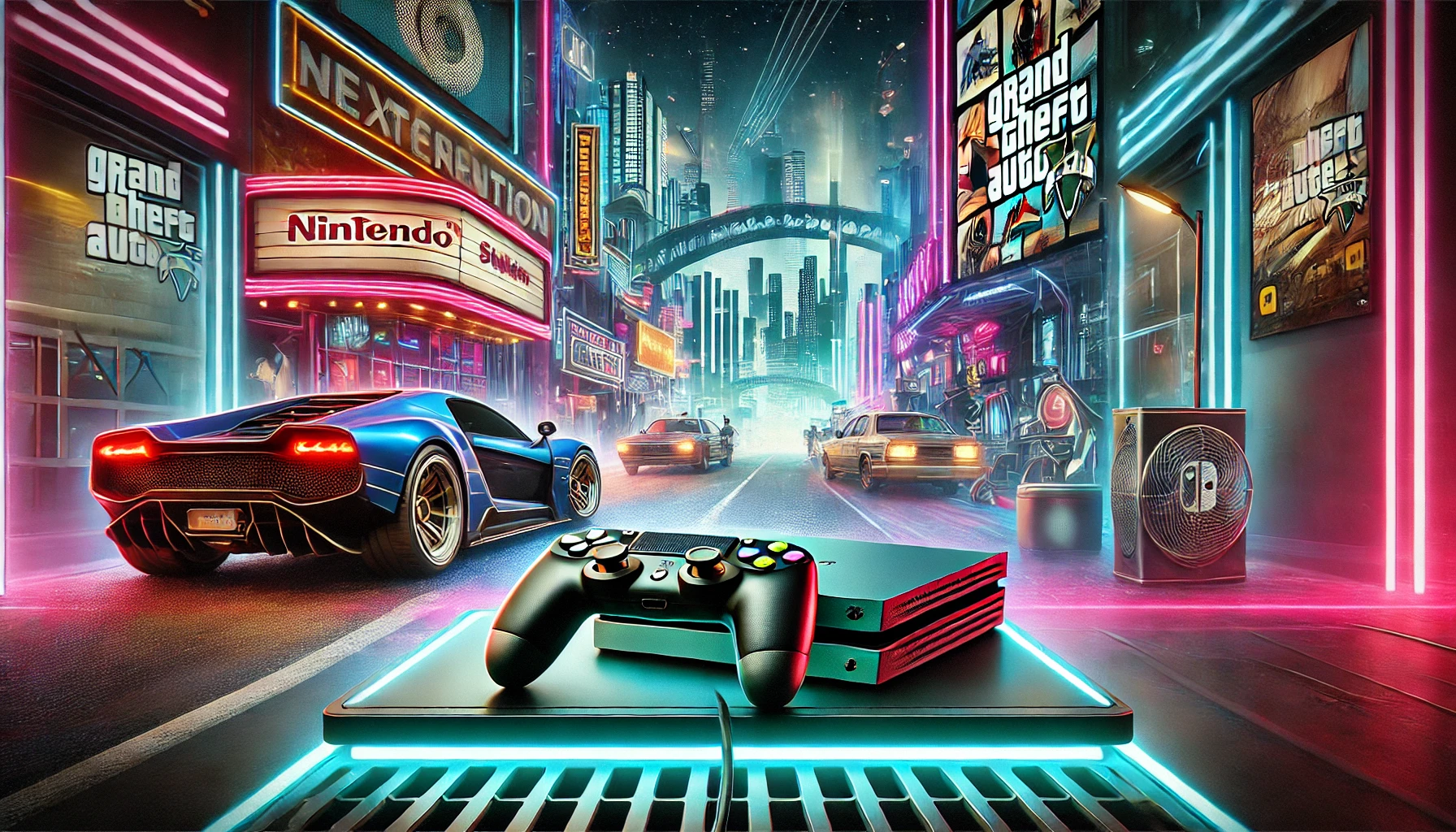
The video game industry is approaching a pivotal moment, pinning its future on the monumental launches of two highly anticipated titles in 2025—Nintendo’s next-generation Switch console and Take-Two Interactive’s Grand Theft Auto VI. After a lackluster performance in 2024, with total U.S. video game revenue dipping by 1% to $58.7 billion, there’s widespread hope that these blockbuster releases will breathe new life into the market. But as the stakes rise higher, one pressing question remains: Will these two juggernauts be the spark the industry needs, or will their impact be fleeting amid shifting consumer habits and fierce competition?
The Industry’s Biggest Bets in Years
Nintendo’s original Switch console, launched in 2017, became a cultural phenomenon, selling over 150 million units to claim its place as the company’s best-selling console of all time. Its successor, projected to launch later this year, follows an unusually long eight-year gap between hardware generations—marking Nintendo’s longest such wait in history. The anticipation is palpable, with fans hoping for an equally groundbreaking device.
Meanwhile, Take-Two’s Grand Theft Auto VI (GTA VI) represents the franchise’s first new installment since Grand Theft Auto V launched in 2013. With over 210 million copies sold, GTA V stands as one of the best-selling games in history, setting sky-high expectations for its sequel. Yet, this much-awaited entry faces challenges common in today’s gaming landscape—meeting expectations for innovation, engagement, and retention.
While both the next-generation Switch and GTA VI are expected to be smashing successes, their ability to reverse the overall slowdown in the gaming industry remains uncertain. The risk of delays or underperformance is high, and even these powerhouse launches may be insufficient to transform the trajectory of an entire $58 billion market.
The Challenge of Maintaining Gamer Engagement
Today’s gaming market demands more than just big names. Even renowned franchises are grappling to retain player loyalty amid consumer shifts and increased competition for attention. Consider the struggles of Electronic Arts’ (EA) soccer franchise, rebranded from FIFA to EA Sports FC. Despite its strong heritage, the franchise experienced unexpected revenue declines, forcing EA to assure investors that player engagement was on the rise. Analysts still predict a 6% revenue drop for EA in the fiscal year ending this March—a cautionary tale for the upcoming GTA VI and Switch successor.
For Nintendo and Take-Two, the challenge lies beyond just attracting gamers—it’s about holding their attention in a saturated entertainment market. From streaming TV shows to mobile games and VR experiences, gamers today have countless options competing for their free time. The pressure is on for these companies to not only deliver high-quality products but also sustain engagement long after release day.
A Narrow Halo Effect for the Industry
Both GTA VI and the new Switch are likely to dominate headlines, social media, and gamers’ minds upon launch. But the broader question is how much of their success will radiate across the gaming industry as a whole.
For Nintendo, a new console often drives increased demand for its first-party titles. Franchise staples like Super Mario and The Legend of Zelda repeatedly top bestseller lists during console launches. However, this leaves little room for third-party developers on the Nintendo platform—a trend that has persisted with the original Switch. Case in point, in 2024, 16 of the top 20 Switch games sold in the U.S. were Nintendo-owned titles. Without a broader ecosystem of successful third-party games, the new Switch might not boost overall industry revenue in a significant way.
On the other hand, GTA VI casts a long shadow, with its sheer blockbuster status potentially causing collateral damage to other game releases. Competing publishers are likely to avoid launching big-budget games near GTA VI’s undisclosed release date to minimize direct competition. EA’s upcoming Battlefield game, for instance, risks being overshadowed if launched too close to Take-Two’s giant. Ironically, one of 2025’s biggest gaming victories might inadvertently suppress a competitive landscape.
Risks and Investor Sentiment
Every high-stakes launch comes with potential pitfalls. For Nintendo, history serves as a reminder that success is never guaranteed. The Wii U, launched in 2012, sold just 13.6 million units, a far cry from the original Wii’s 100+ million unit sales. Similarly, while the success of the original Switch was amplified by the COVID-19 pandemic driving demand, replicating these conditions in 2025 is unlikely.
Take-Two faces comparable risks with its GTA VI release. Beyond fan expectations, it must manage development timelines, which are notorious in the gaming industry for delays. The level of secrecy and vagueness around the game’s launch window has fueled curiosity but also introduced uncertainty for investors and competitors alike.
Despite the risks, investor sentiment remains overwhelmingly positive for both companies. Nintendo’s stock has climbed 34% in the past three months, outperforming most of the S&P 500. At the same time, Take-Two’s stock has risen by an impressive 41% over the last year. If GTA VI achieves its ambitious goals, it could propel Take-Two beyond EA, potentially crowning it the world’s largest stand-alone game publisher by revenue.
A Crossroad Year for the Gaming Industry
The gaming industry enters 2025 with more at stake than just the performance of two blockbuster launches. Nintendo and Take-Two carry the weight of an entire sector looking for rejuvenation. Their successes—or failures—will set the tone for an industry navigating innovation, engagement, and heightened competition.
If Nintendo’s next Switch builds on its predecessor’s legacy and GTA VI electrifies fans as expected, these launches could mark a turning point for the industry. But if delays, underwhelming reception, or market saturation hinder their performance, the $58 billion gaming sector could remain stuck in slow-growth mode.
One thing is certain: Both fans and investors have their eyes fixed on 2025. While it’s impossible to predict the future, one thing is clear—this year will define the next chapter for the gaming world.
Feel free to share your experiences and insights in the comments below. Let’s continue the conversation and grow together as a community of traders and analysts.
By sharing this experience and insights, I hope to contribute to the collective knowledge of our professional community, encouraging a culture of strategic thinking and informed decision-making.
As always, thorough research and risk management are crucial. The dynamic nature of financial markets demands vigilance, agility, and a deep understanding of the tools at your disposal. Here’s to profitable trading and navigating the election season with confidence!
Ready to stay ahead of market trends and make informed investment decisions? Follow our page for more insights and updates on the latest in the financial world!
For a free online stock market training by Yogeshwar Vashishtha (M.Tech IIT) this Saturday from 11 am – 1 pm, please sign up with https://pathfinderstrainings.in/training/freetrainings.aspx
Experience profits with my winning algo strategies – get a free one-month trial with ₹15 lakh capital! – https://www.terminal.algofinder.in/auth/register
Disclaimer
This article should not be interpreted as investment advice. For any investment decisions, consult a reputable financial advisor. The author and publisher are not responsible for any losses incurred by investors or traders based on the information provided.