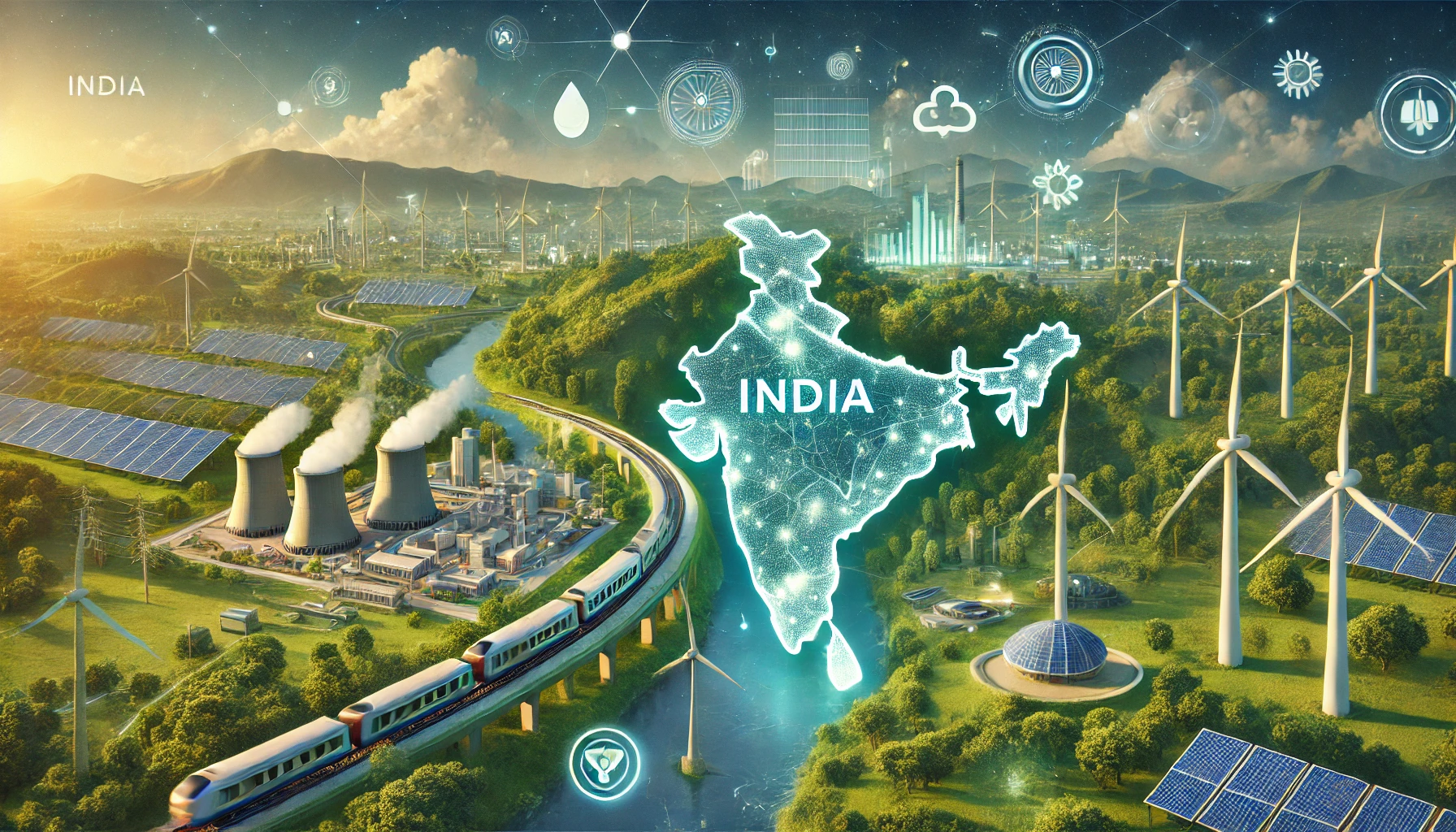
India stands at the crossroads of economic development and climate action, poised to become a leading force in green energy. With the vision of Viksit Bharat signaling its ambition to become a developed economy by 2047, India has simultaneously committed itself to substantial climate action. This dual mission is supported by bold targets, such as reducing emissions intensity of GDP by 45% from 2005 levels by 2030 and ensuring that 50% of installed power capacity comes from non-fossil fuel sources by the same year.
By aiming for a renewable energy capacity of 500 GW by 2030 and striving for net-zero emissions by 2070, the country is charting a course toward sustainability. This article explores India’s green energy initiatives, focusing on policy, investments, and key technologies driving the nation’s clean energy future.
India’s Renewable Energy Targets and Key Drivers
To meet its ambitious climate goals, India is transitioning to cleaner energy solutions. The spotlight is on renewable sources such as solar, wind, nuclear, and biofuels, alongside advanced technologies like carbon capture, utilization, and storage (CCUS). These efforts are complemented by innovations in energy storage, ensuring a resilient and efficient power grid.
India’s strategic approach is reshaping its energy landscape. By integrating renewable sources into the energy mix and addressing challenges like industrial decarbonization, the nation is moving closer to achieving sustainable growth.
The Role of Policy and Investment in Driving Change
A robust policy framework is the backbone of any large-scale shift, and India’s green energy transition is no different. Policies focused on resource efficiency, research and development (R&D), and investment incentives are accelerating the adoption of clean energy technologies.
Budget Allocations for Sustainability
India’s Union Budgets in recent years reflect growing financial commitments towards climate action and clean energy. Notable allocations include:
- ₹35,000 crore in 2023 for energy transition initiatives.
- ₹19,100 crore dedicated to the Ministry of New and Renewable Energy (MNRE) in 2024.
- ₹3,079 crore for climate action in 2023-24, a 24% increase from the previous year.
- ₹3,330.37 crore for the environment ministry in 2024-25.
These investments illustrate the government’s resolve to support the renewable energy sector. However, additional capital will be required to advance pivotal clean energy technologies, such as offshore wind, hydrogen production, and grid-scale energy storage solutions.
Strengthening Power Distribution
Efficient power distribution is critical to integrating renewables into India’s energy grid. Reforming power distribution companies (DISCOMs) will enhance operational efficiency and ensure seamless adoption of clean energy solutions.
Addressing Industrial Decarbonization and Climate Finance
The decarbonization of hard-to-abate sectors, such as steel and cement, is a significant challenge for India’s green energy efforts. Support for the micro, small, and medium enterprises (MSME) sector is equally vital to enable the adoption of low-carbon technologies without sacrificing growth and employment.
The introduction of a climate finance taxonomy is a promising step, as it aims to streamline financial flows towards mitigation and adaptation efforts. With economic growth projected at 6% amid increasing extreme weather events, such frameworks are crucial for advancing sustainability.
India’s upcoming budgets offer an opportunity to solidify climate resilience and drive climate action through targeted policy measures.
FY26 Budget and the Push for Clean Tech Manufacturing
The FY26 budget is set to play a pivotal role in advancing India’s green energy agenda. A significant focus is on clean technology manufacturing, which will strengthen domestic supply chains and reduce reliance on imports.
Key areas of focus include:
- Solar PV cells
- EV batteries, motors, and controllers
- Electrolyzers for green hydrogen production
- Wind turbines
- High-voltage transmission equipment
- Grid-scale energy storage solutions
Additionally, state governments will be incentivized through reforms, with provisions for additional borrowing linked to implementing sectoral initiatives. These efforts will bolster India’s energy ecosystem and promote a self-reliant green economy.
Nuclear Energy: The Next Frontier in India’s Energy Transition
India’s Nuclear Energy Mission is a landmark development, targeting a nuclear power capacity of 100 GW by 2047. This ambitious plan addresses one of the nation’s key challenges—securing a stable, low-carbon power supply.
To achieve this, major reforms are being implemented, including:
- Amendments to the Atomic Energy Act and Civil Liability for Nuclear Damage Act to facilitate private sector participation.
- A planned ₹20,000 crore investment in Small Modular Reactors (SMRs), with a goal of deploying at least five indigenous SMRs by 2033.
Expanding nuclear energy capacity will significantly reduce India’s reliance on fossil fuels while supporting its transition to a net-zero future.
A Holistic Approach to Sustainability
India’s green energy transition extends beyond renewable power. Rural development, sustainable public transport, AI-driven infrastructure, and circular economy principles are integral to the nation’s strategy. By addressing these areas, India aims to create a balanced approach to urbanization and environmental protection.
Key focus areas include:
- Climate-resilient agriculture
- Skill development in clean technology
- Urban reforms to promote sustainable living
- Investments in infrastructure for public and alternative transport
These initiatives align with the Viksit Bharat vision of a developed, resilient, and eco-conscious India.
Empowering Change
India’s bold renewable energy ambitions and strategic investments signal its commitment to a sustainable future. By leveraging policy reforms, technological advancements, and economic measures, the country is pioneering a path that other nations can emulate.
While challenges persist, India’s unified approach—spanning national policies, state-level participation, and private sector engagement—demonstrates the power of collective action. Together, these efforts position India as a global leader in the fight against climate change and a key player in driving the green economy.
Feel free to share your experiences and insights in the comments below. Let’s continue the conversation and grow together as a community of traders and analysts.
By sharing this experience and insights, I hope to contribute to the collective knowledge of our professional community, encouraging a culture of strategic thinking and informed decision-making.
As always, thorough research and risk management are crucial. The dynamic nature of financial markets demands vigilance, agility, and a deep understanding of the tools at your disposal. Here’s to profitable trading and navigating the election season with confidence!
Ready to stay ahead of market trends and make informed investment decisions? Follow our page for more insights and updates on the latest in the financial world!
For a free online stock market training by Yogeshwar Vashishtha (M.Tech IIT) this Saturday from 11 am – 1 pm, please sign up with https://pathfinderstrainings.in/training/freetrainings.aspx
Experience profits with my winning algo strategies – get a free one-month trial with ₹15 lakh capital! – https://www.terminal.algofinder.in/auth/register
Disclaimer
This article should not be interpreted as investment advice. For any investment decisions, consult a reputable financial advisor. The author and publisher are not responsible for any losses incurred by investors or traders based on the information provided.